



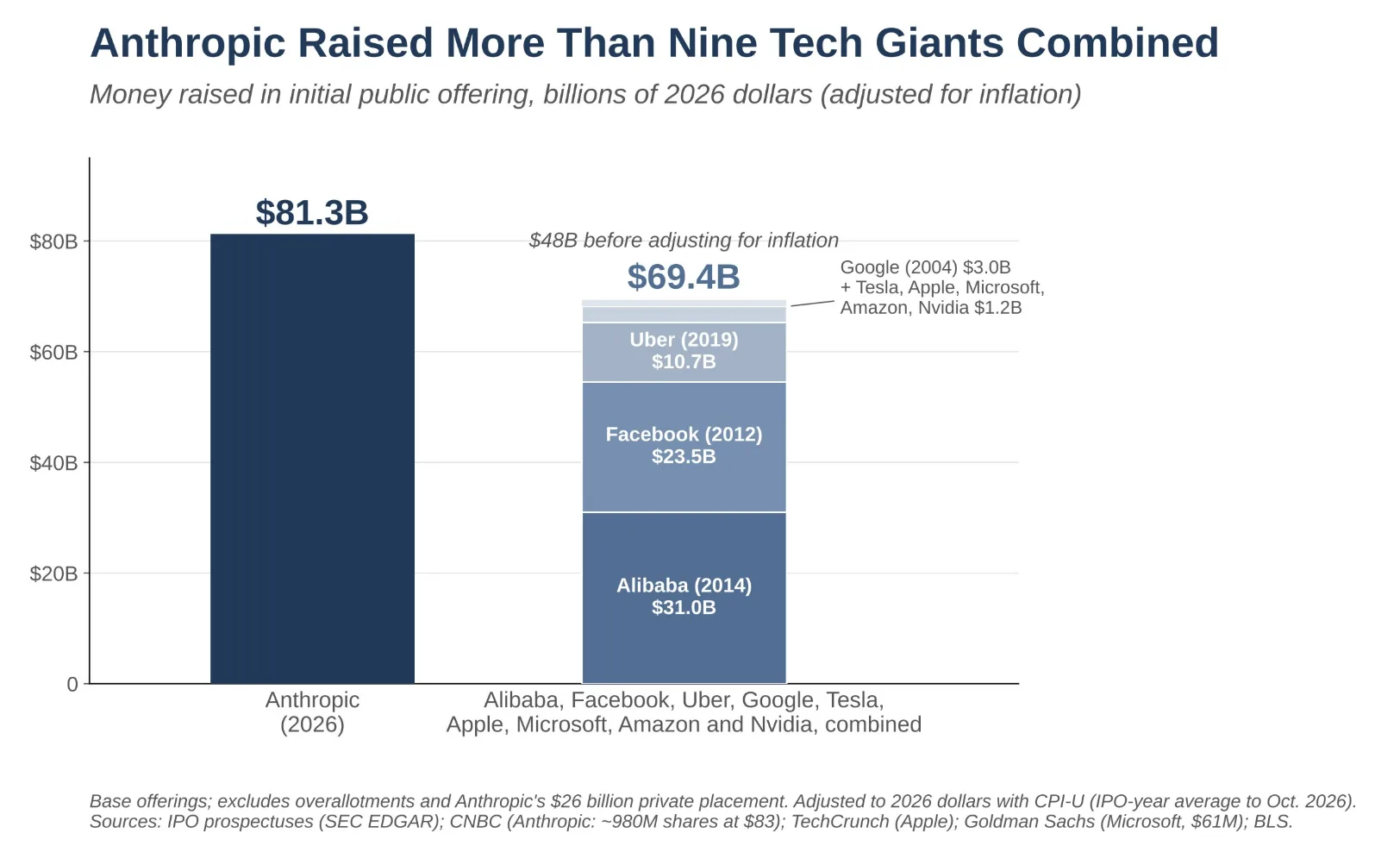
Anthropic’s historic IPO (initial public offering) began smoothly, with its shares listing on the US stock market yesterday. In doing so, it became the seventh-most-valuable company in the US. Based on its current share price, only Apple, Microsoft, Nvidia, Alphabet, Amazon, and SpaceX are currently worth more than Anthropic.
That’s quite an achievement for the seven-person team that left OpenAI and received its first round of funding in 2021. By listing on the stock exchange, they raised $81 billion, which is the largest IPO ever!
Should you invest in an I.P.O?
Anthropic’s main product is Claude, which includes Claude Code, Cowork, Developer platform, and Claude Science. The company's future isn't selling €250 subscriptions to small businesses (like mine!) but embedding its new technology in more established businesses and/or letting newer businesses piggyback on its technology. I use Claude for researching, creating slides, and some family queries. Let me give you an example. I know legendary investor Warren Buffett has a negative view of I.P.Os and would never invest in them, but I can’t remember the exact quote he used. I asked Claude whether Warren Buffett invests in I.P.O.s, and this was its response:
Buffett’s view, repeated over many years, was that IPOs are rarely a good place to find bargains. His reasons fall into a few themes.
1. The seller controls the timing. This is his main argument. He compares the stock market to an auction, where bargains sometimes appear, and the IPO market to a negotiated deal, where cheap securities are hard to come by. At a Berkshire shareholder meeting he said an IPO situation “more closely approximates a negotiated deal”, because the seller picks when to come to market and won’t necessarily pick a time that suits the buyer.
2. Costs and promotion inflate the price. Both Buffett and Munger have called the underwriting fees that investment banks charge for IPOs “ridiculous,” saying they inflate IPO prices. He also thought it unlikely that a heavily marketed new issue would be the best bargain on offer.
3. He almost never bought them. In a 2019 CNBC interview he said, “In 54 years, I don’t think Berkshire’s ever bought a new issue,” and Munger added that the banks don’t even call them. In 2014, he told Fox Business Network that he couldn’t recall participating in an IPO in the last five decades.
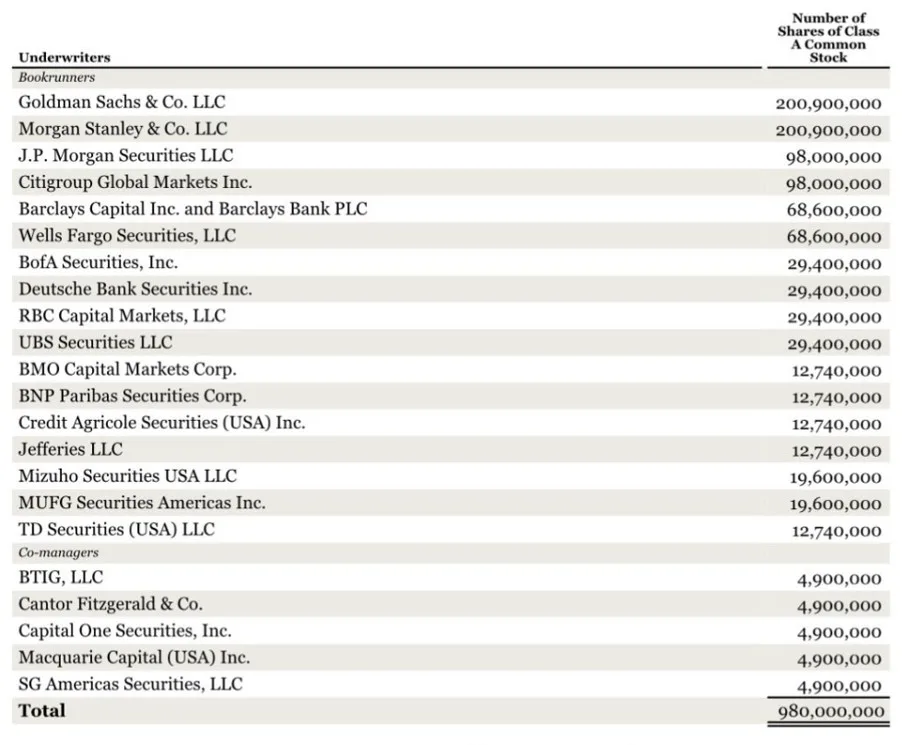
So, there you have it. Buffett is not a fan of I.P.Os. I think it's fair to say that a lot of people get paid when a company goes public. Buffett mentions underwriters, which are banks or financial institutions that sell shares to members of the public, typically their clients. So, if you are a client of one of the underwriters (see below), you would have received a call from an enthusiastic staff member extolling the virtues of Anthropic.
The history of investing in I.P.O.s is mixed
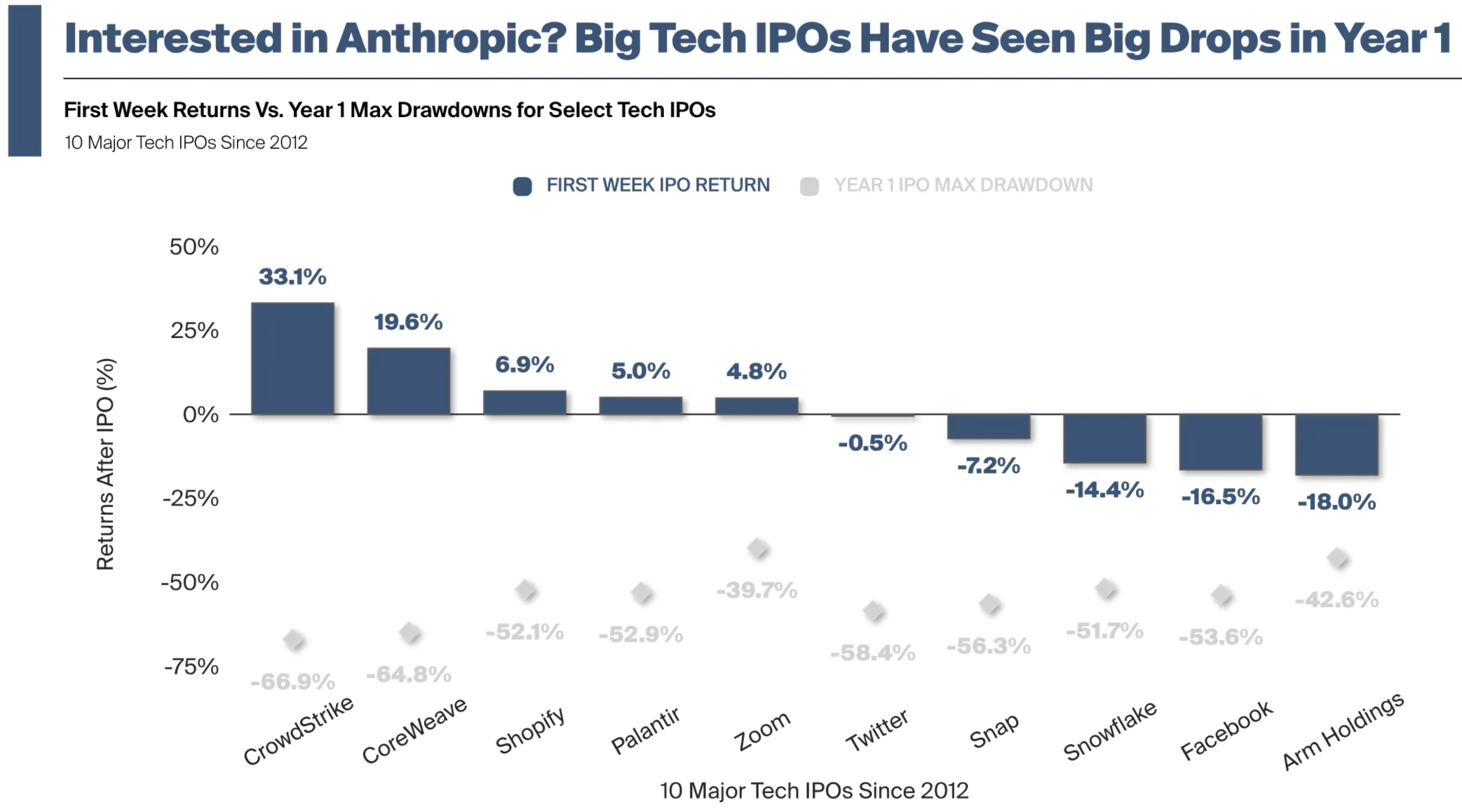
I.P.O.s are a necessary and positive part of capital markets, but investing in these companies has been a mixed bag. The chart below compares how ten well-known tech IPOs did in their first week with the biggest drop each one had from a high during its first year of trading. Some of these stocks jumped in their first week, and some fell, but all of them dropped about 40% or more from a high at some point in year one. The average drop was more than 50%, and some of the best first weeks were followed by some of the biggest declines. A strong debut on the stock market may not say much about what comes next. Investors looking at newly listed companies may want to be prepared for big swings.
Contact us today.
 +353 (0)87 344 5882
 info@saolcapital.ie
 Saol Capital, City Quarter, Lapps Quay, Cork T12 Y3ET
Registered in Ireland, company number 682955
Long Strand Limited trading as Saol Capital is regulated by the Central Bank of Ireland
© Copyright 2026 | Saol Capital | Software by REDStudio | All Rights Reserved
Contact us today.
+353 (0)87 344 5882
info@saolcapital.ie
Saol Capital, City Quarter, Lapps Quay, Cork T12 Y3ET
Registered in Ireland, company number 682955
Long Strand Limited trading as Saol Capital is regulated by the Central Bank of Ireland
Sustainable Finance Disclosure
© Copyright 2026 | Saol Capital | Software by REDStudio | All Rights Reserved