

"It's tough to make predictions, especially about the future."
Yogi Berra
Nearly every day, we hear about billions of dollars being poured into artificial intelligence (AI). And with all the excitement, it’s no surprise that people are starting to ask if this is turning into an “AI bubble.”
Recently, the governor of the Central Bank of Ireland, Gabriel Makhlouf, advised that we are due a 'correction' due to "high equity valuations driven by US technology and artificial intelligence related stocks."
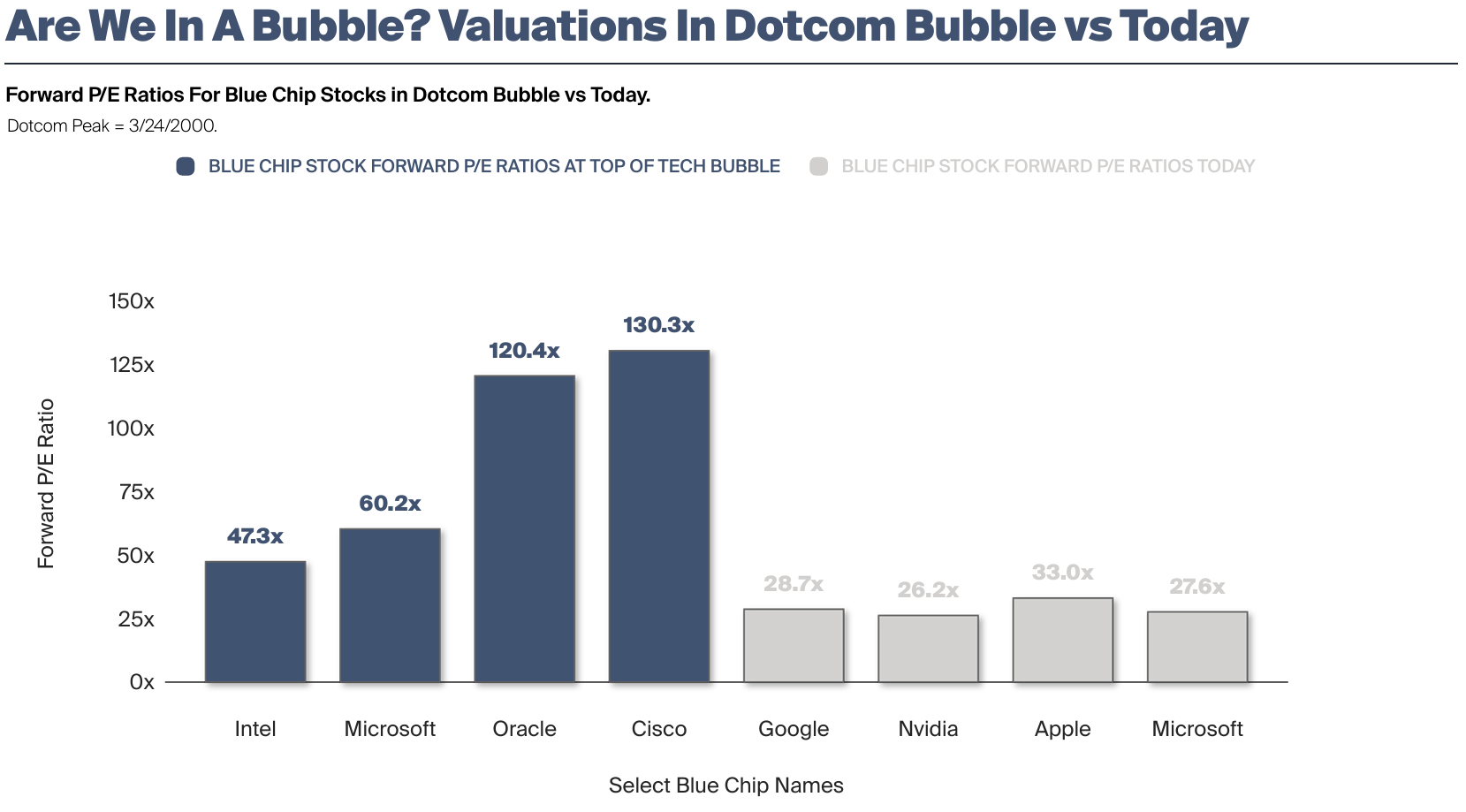
Is he correct? Well, it's hard to know, however, I think it's fair to say that the US Market, as measured by the S&P 500, is certainly expensive relative to history. That being said, tech company valuations are still a long way off the madness of the Dotcom era of the late 1990s (see graph).
Technology companies are driving the markets.
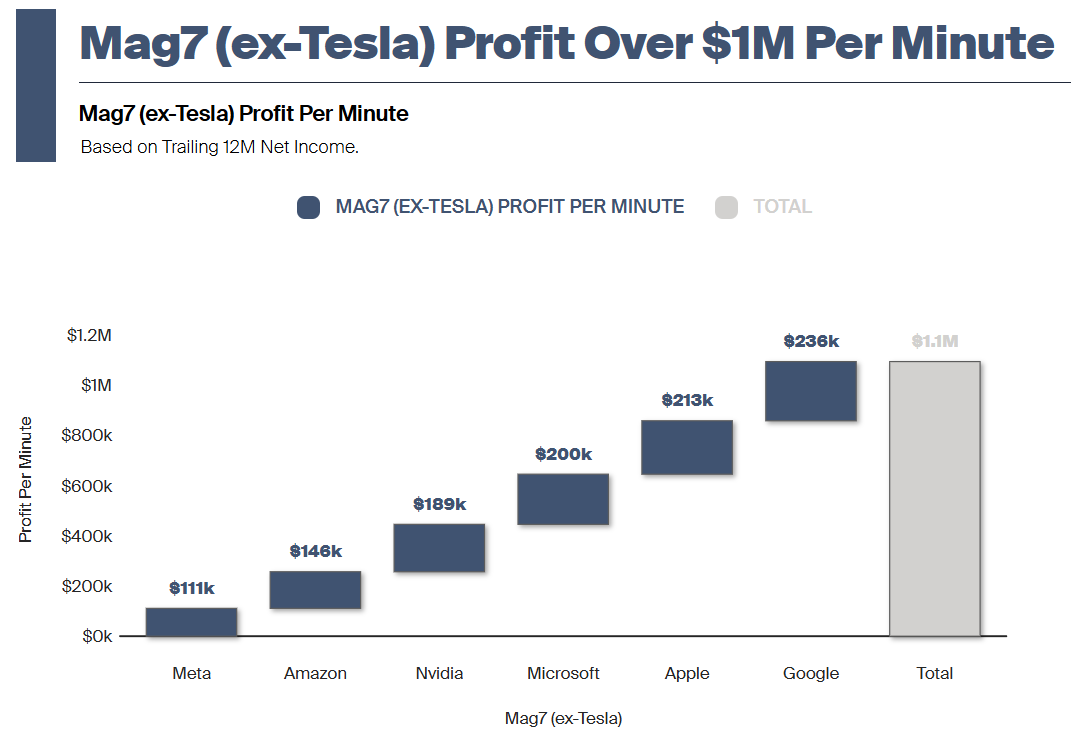
The well-known "Mag 7" (Apple, Microsoft, Alphabet, Amazon, Meta, Nvidia, and Tesla) now constitute over 36% of the S&P 500 by market cap. Over the past 15 years, the US stock market's upward trend has largely mirrored the rise of these influential tech giants. Their combined power has steadily increased, driven by impressive performance and expanding influence in the index. The graph below showcases just how profitable these companies are — their profitability far exceeds that of traditional (non-Tech) firms, which is truly remarkable.
2025 Returns
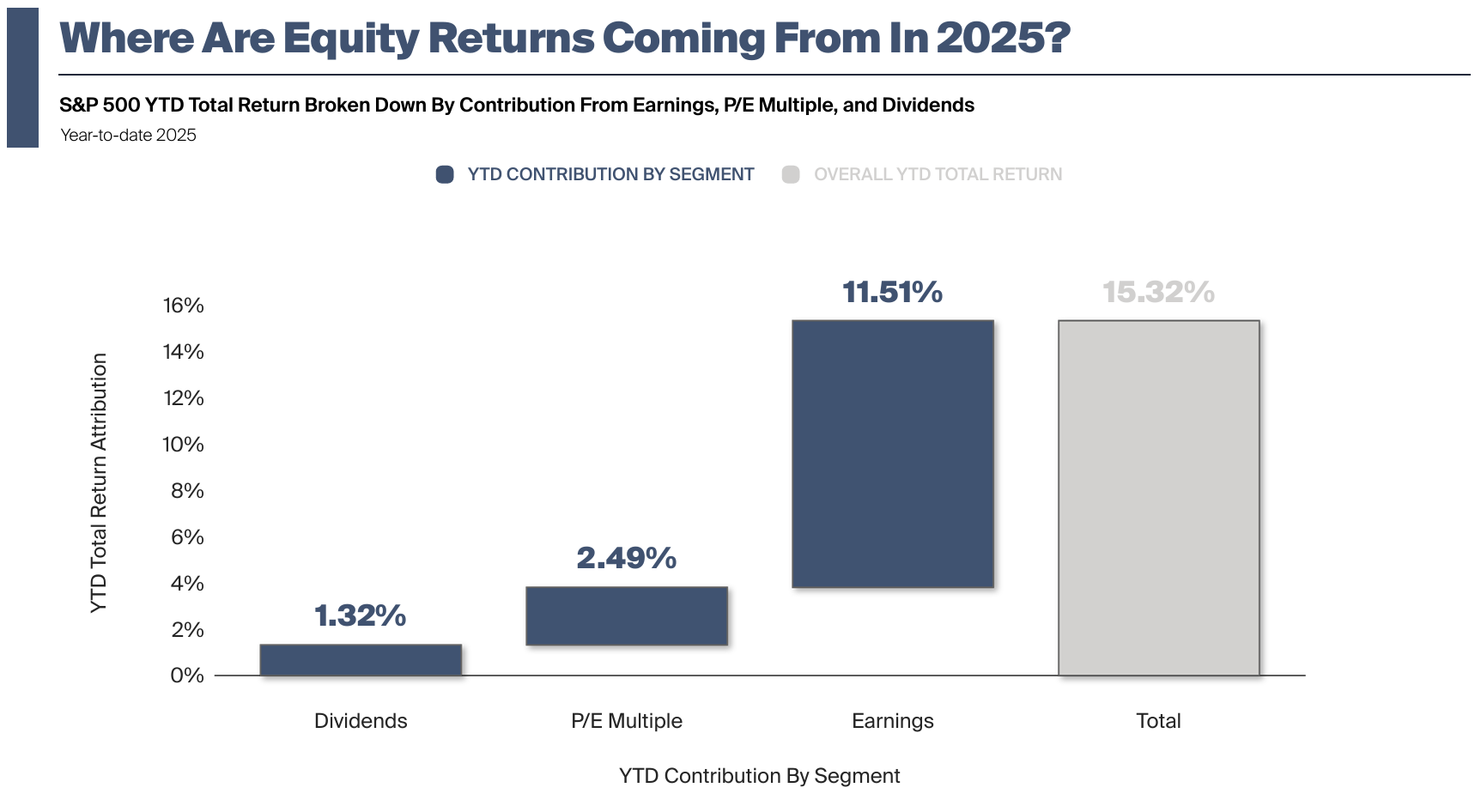
The chart below shows the S&P 500's year-to-date total return, broken down into contributions from three key segments: earnings growth, P/E multiple, and dividends. By seeing these parts together, it becomes easier to understand whether the market gains are genuinely backed by strong fundamentals or if they are driven by changes in valuation. So far, in 2025, the US market has been climbing mainly because of increased earnings, which is a positive sign compared to speculation.
Long-Term Investment Returns
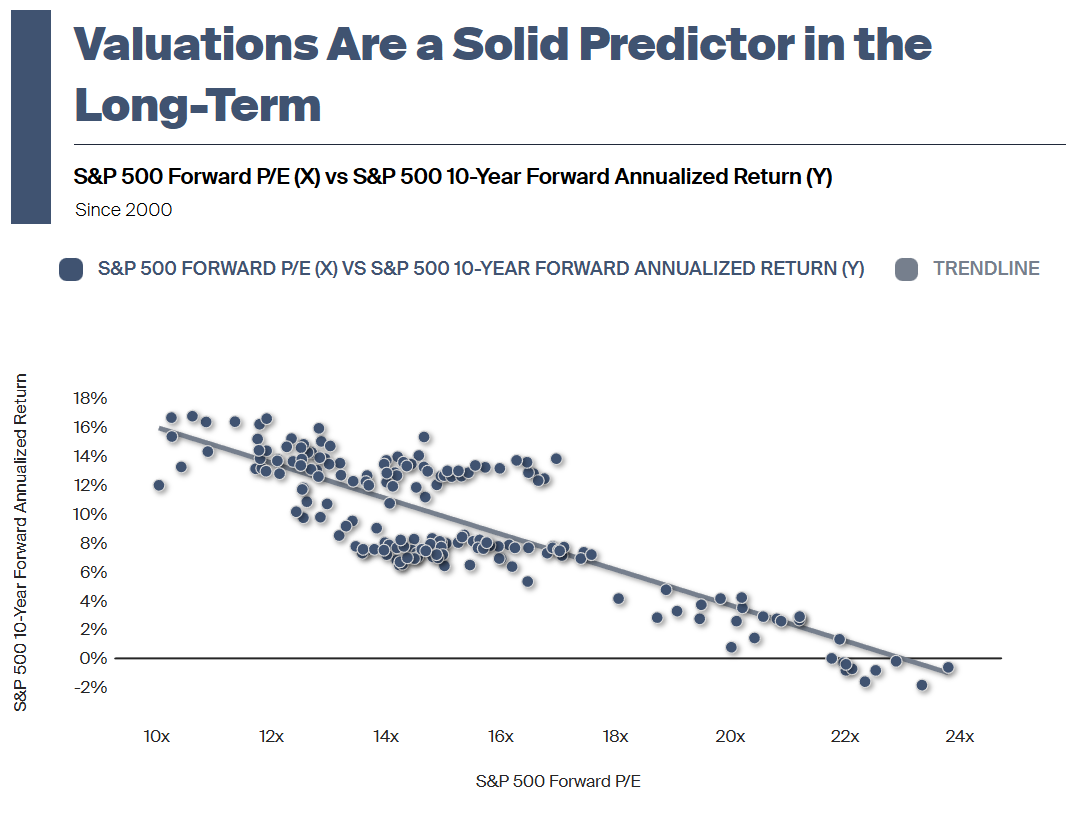
This chart (below) illustrates the relationship between the S&P 500's forward price-to-earnings (P/E) ratio and its 10-year forward annualized returns. It suggests that, over the long term, valuations—represented by the forward P/E ratio—can be a useful factor in assessing potential future market performance. Recognising that the S&P 500 is currently trading at 22 times earnings, investment returns in the US stock market may be muted over the longer term.
What action can you take when markets are expensive?
1) Diversification softens the blow.
Bubbles can sting for everyone, but they hit hardest if you’re all-in on the “hot” investment of the day. When the tech bubble burst in 2000, the Nasdaq dropped nearly 80% over three years, but plenty of other parts of the market held up better. Diversify your portfolio, perhaps pivoting to more value strategies.
2) Focus on your financial plan, not the market
Having a 'full fat' financial plan, which includes cashflow modelling, gives you a greater perspective of your overall financial position. Focus on your family cashflows, rather the vagaries of the stock market.
3) Rebalance to more defensive assets
While we advise clients to invest in portfolios with a high element of equities, there may be situations where rebalancing to a more defensive portfolio is the optimal solution.
4) Avoid FOMO investing
'Fear of missing out' or 'FOMO' is a popular term related to seeing events on social media and wishing you were there. FOMO investing has been around well before social media, and it refers to invesing because other people are doing it. FOMO investing in the stock market, without proper diversification and time, can be a quick way to learn a hard investment lesson.
Howard Marks on whether we are in an AI bubble
No one knows whether an AI bubble is forming - even those with superior information. In 1996, the then Chairman of the US Federal Reserve (Central Bank) warned of 'irrational exuberance' and lofty valuation in the US stock market. The market promptly doubled over the next three years. The investor, Howard Marks, has given (in my view) the best description of where we currently are, and if we are in an A.I. bubble. This 6 minute talk is worth your time (link below).
https://substack.com/@marketsentiment/note/c-179044265?r=z7deh&utm_medium=ios
 +353 (0)87 344 5882
 info@saolcapital.ie
 Saol Capital, City Quarter, Lapps Quay, Cork T12 Y3ET